
Should Testosterone Be Removed From The Controlled Drug List?

Timeline
Video Summary
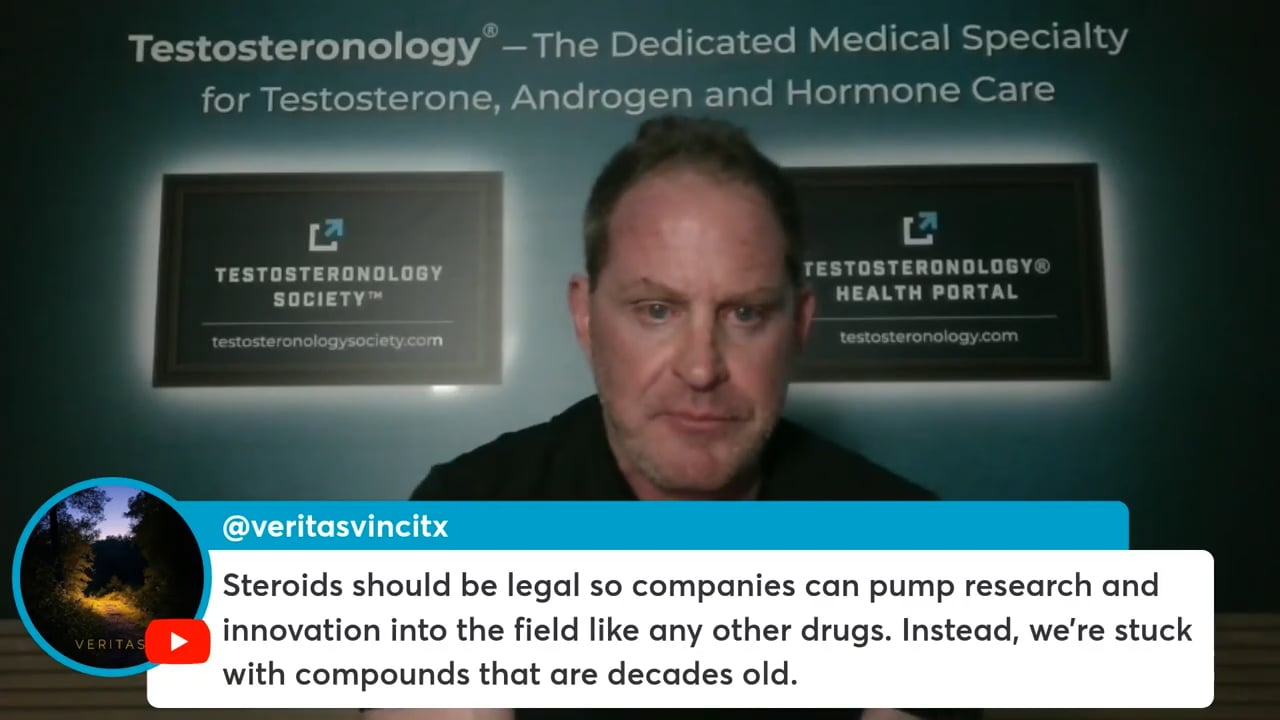
Thomas O'Connor advocates easier access to testosterone while preserving medical regulation and ongoing monitoring. Responding to a viewer’s argument that legalization could encourage research and innovation, he supports reform while distinguishing supervised treatment from unrestricted availability.
He proposes removing testosterone from the controlled drug list and connects its scheduling history with concerns about performance-enhancing drugs in competitive sports. He discusses Ben Johnson’s steroid use as an example of how athletic controversies shaped attitudes toward testosterone and anabolic steroids.
Dr. O’Connor also describes his society’s response to an FDA request for comments. He emphasizes access for adults who need testosterone, appropriate evaluation, and continued management of treatment effects. Removing controlled status is his proposed policy change rather than a description of current law.
The discussion then turns to prostate cancer and the testosterone saturation model. Dr. O’Connor challenges the claim that testosterone necessarily causes prostate cancer while stressing that prostate assessment remains important. He acknowledges controversy surrounding testosterone treatment in men with existing prostate cancer and cautions against prescribing without considering the diagnosis.
He closes by rejecting unrestricted over-the-counter access. His position combines improved accessibility with regulated treatment, an understanding of potential side effects, and ongoing medical supervision.
Drug Callouts
Condition Callouts
Key Takeaways
- Testosterone is currently a Schedule III controlled substance under U.S. federal law; removing that classification is a proposed policy change, not the current legal position.
- A controlled-substance designation does not mean a medication has no legitimate medical use, and testosterone can be prescribed for appropriate medical indications.
- Improving access to testosterone does not require abandoning regulation, patient assessment, or ongoing monitoring.
- The absence of evidence that TRT causes prostate cancer does not establish that testosterone prevents cancer or is appropriate for every man with an existing diagnosis.
- Prostate health remains part of testosterone treatment assessment even when a clinician challenges the claim that testosterone causes prostate cancer.
- Dr. O’Connor’s proposed approach combines adult access with informed understanding of side effects and continued medical supervision, rather than unrestricted over-the-counter use.