
Could Your TRT Dose Explain Fatigue After Eating?

Timeline
Video Summary
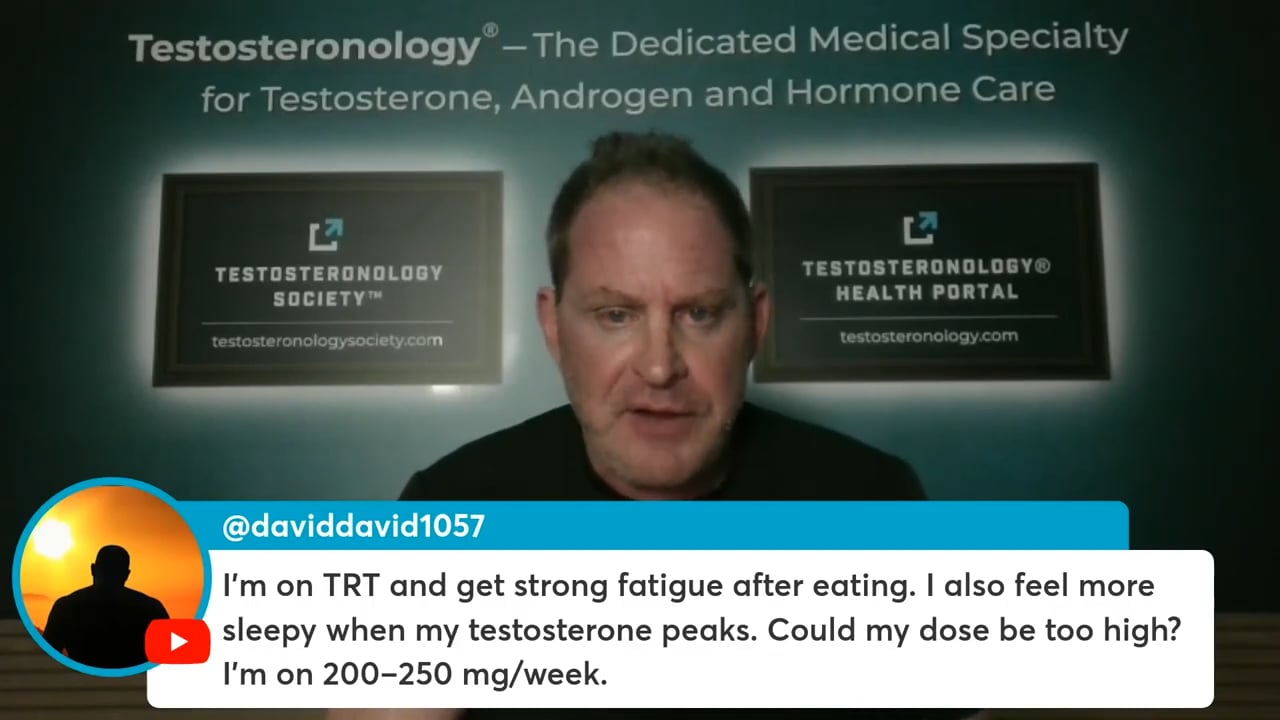
A 43-year-old man on TRT reports strong fatigue after meals and greater sleepiness when testosterone peaks. He uses 200–250 mg weekly and asks whether his dose could be too high. Dr. O’Connor considers excessive dosing a possibility but does not establish the cause of the fatigue.
Dr. O’Connor describes using 100 mg every five days for himself and many patients as an example of his preferred approach. He emphasizes balancing dose and injection frequency rather than assuming that more testosterone produces better results.
The discussion expands to clinics offering higher testosterone doses and additional anabolic steroids, including Deca-Durabolin and Anavar. Dr. O’Connor questions treatment approaches that accumulate medications without a clear, sustainable plan.
He recounts an older patient who relied on office injections every one or two weeks. The patient reportedly felt better with weekly visits but sometimes delayed treatment, resulting in low testosterone measurements after a two-week interval. The example illustrates how administration timing can affect symptoms and laboratory results.
Dr. O’Connor then questions the long-term practicality of very frequent injections and complex combinations of hormonal medications. He favors the lowest effective testosterone dose, a sustainable schedule, and ongoing monitoring through the ABCDs™ framework. The video does not provide a specific diagnosis or treatment for post-meal fatigue.
Drug Callouts
Condition Callouts
Key Takeaways
- Fatigue after eating does not identify its cause, and its occurrence during TRT does not by itself prove that testosterone is responsible.
- A weekly testosterone dose of 200–250 mg may be excessive for some men, so Dr. O’Connor emphasizes individual dose assessment rather than treating that range as appropriate for everyone.
- Symptoms that recur near testosterone peaks or before the next injection provide useful timing information to review alongside consistently timed laboratory results.
- Delayed or inconsistent injections can change testosterone exposure and make symptoms and laboratory results harder to compare.
- Adding anabolic steroids introduces additional effects and risks; oxandrolone, for example, can raise LDL cholesterol and lower HDL cholesterol.
- A sustainable TRT plan should use the lowest effective dose, a schedule the patient can maintain, and ongoing health monitoring rather than continually adding injections or medications.