
Legacy App users can now access the Health Portal – just reset your password using email as username.

What Are Retatrutide Risks For Men On Testosterone?
What Are Retatrutide Risks For Men On Testosterone?

Viewing This Video Is A Member Exclusive Feature

But you don’t need membership to get Dr. O’Connor’s insight on this topic, it’s in the summary, key takeaways, and related drugs and conditions below.

Want to watch the full video? Join the Health Portal Today.

Join Now

Timeline

Timestamp
Topic
00:00
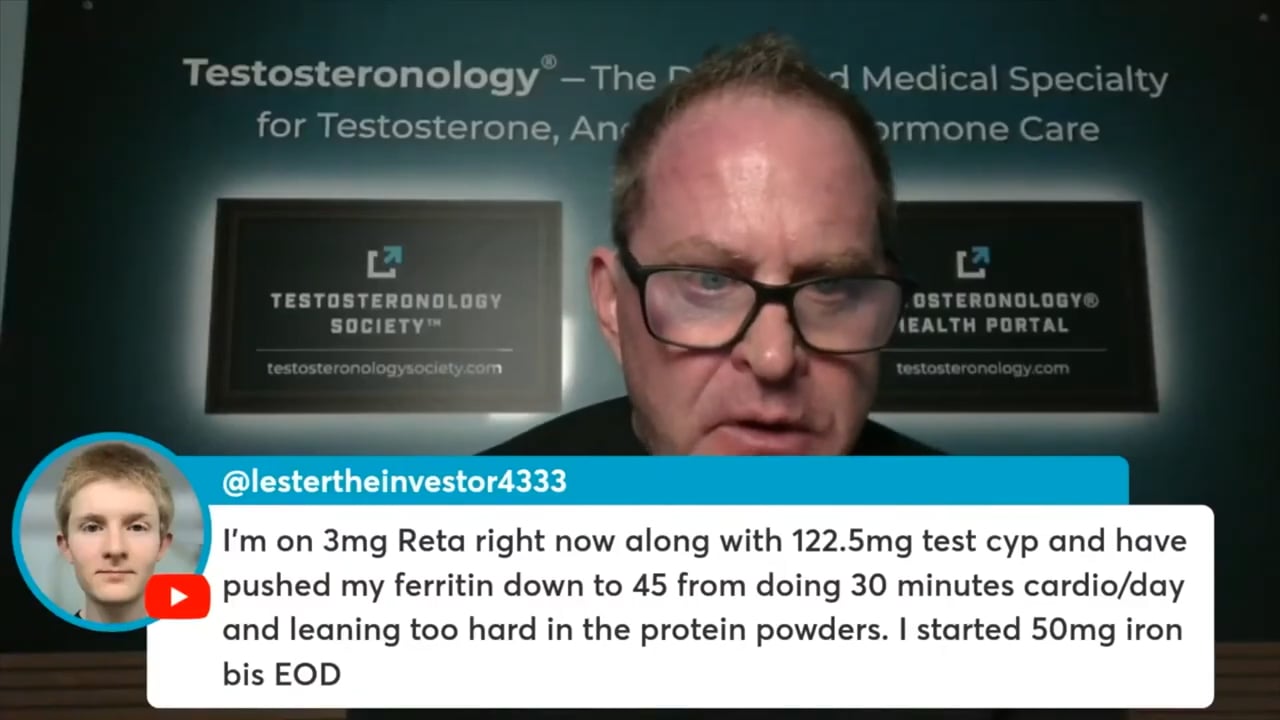
A man using retatrutide and testosterone reports ferritin of 40. Dr. O’Connor explains how increased red blood cell production can draw on stored iron and discusses the balance between red blood cell production and breakdown.
01:50
Dr. O’Connor compares retatrutide with tirzepatide and raises sourcing concerns. He then discusses increased heart rate, possible dehydration or autonomic effects, calorie restriction, and muscle loss during weight reduction.
04:10
The discussion turns to tirzepatide, nebivolol, and adding medications to manage another drug's effects. Dr. O’Connor mentions telmisartan and emphasizes individualized assessment, reliable sourcing, sustainability, and side effects.

Video Summary

A man using retatrutide and testosterone asks about falling ferritin and managing his heart rate. He reports ferritin of 40, daily cardio, and heavy reliance on protein powders. Dr. O’Connor asks his age and emphasizes that the available information is insufficient for an individualized assessment.

Dr. O’Connor explains that testosterone can increase red blood cell production, drawing on stored iron and lowering ferritin. He discusses the balance between red blood cell production and breakdown rather than treating a ferritin value alone as proof of a specific problem.

The discussion shifts to retatrutide, which he describes as acting on GLP-1, GIP, and glucagon pathways. He compares it with tirzepatide and raises concerns about sourcing and product reliability. At the time of the recording, he describes retatrutide as investigational and circulating through the peptide market.

Heart rate and weight-loss effects are additional concerns. Dr. O’Connor considers dehydration and autonomic effects as possible contributors to increased heart rate. He also discusses calorie restriction and muscle loss, emphasizing that potential effects on fat metabolism do not make retatrutide anabolic.

He then discusses nebivolol and mentions telmisartan while questioning the practice of adding medications to manage another drug's adverse effects. He closes by emphasizing sourcing, sustainability, side effects, and the need to understand the individual's medical situation before recommending a combination.

Drug Callouts

Drug
Description
Retatrutide
Retatrutide, referred to as Retta, is described as acting on GLP-1, GIP, and glucagon pathways. Dr. O’Connor discusses its potential weight-loss effects, increased heart rate, muscle-loss concerns, and uncertain sourcing. At the time of the recording, he describes it as investigational.
Testosterone
Testosterone is part of the man's reported regimen. Dr. O’Connor explains that increased red blood cell production during testosterone use can draw on stored iron and lower ferritin.
Tirzepatide
Dr. O’Connor describes tirzepatide as acting on GIP and GLP-1 pathways and compares it with retatrutide. He expresses a preference for a legitimate pharmaceutical product while acknowledging cost concerns.
Nebivolol
Nebivolol is discussed in relation to heart rate, hypertension, and nitric oxide effects. Dr. O’Connor cautions against assuming it should routinely be added to counteract another drug's adverse effects.
Telmisartan
Dr. O’Connor briefly mentions telmisartan alongside nebivolol in his discussion of cardiovascular medications. He does not provide a specific telmisartan recommendation for the man asking the question.

Condition Callouts

Condition
Description
Declining Ferritin
Declining ferritin is discussed in men using testosterone or anabolic steroids because increased red blood cell production can consume stored iron. The reported value of 40 is not established as iron deficiency from the information provided.
Elevated Heart Rate
Elevated heart rate is discussed as a concern when retatrutide is combined with testosterone or anabolic steroids. Dr. O’Connor considers possible contributing factors rather than automatically recommending another medication to control it.
Dehydration
Dehydration is raised as a possible contributor to increased heart rate in a man using retatrutide and testosterone. Dr. O’Connor presents it as a question requiring assessment, not a confirmed diagnosis.
Muscle Loss
Muscle loss is discussed during calorie restriction and medication-assisted weight reduction. For men using testosterone or anabolic steroids, Dr. O’Connor emphasizes that potential shifts toward fat metabolism do not make a weight-loss medication anabolic.
Hypertension
Hypertension is discussed as a clinical context in which cardiovascular medications may have a role. For men using testosterone or anabolic steroids, Dr. O’Connor emphasizes individual medical needs rather than treating a medication combination as standard for everyone.

Key Takeaways

  • Testosterone-related red blood cell production can draw on stored iron and contribute to declining ferritin.
  • A ferritin value alone does not establish the cause of the change or the appropriate response.
  • Dr. O’Connor raises concerns about retatrutide sourcing and product reliability.
  • Increased heart rate warrants assessment of possible contributors, including dehydration and medication effects.
  • Potential effects on fat metabolism do not make retatrutide anabolic or eliminate muscle-loss concerns during calorie restriction.
  • Adding medications to manage another drug's effects requires an individualized assessment of benefits, side effects, and sustainability.