
Legacy App users can now access the Health Portal – just reset your password using email as username.

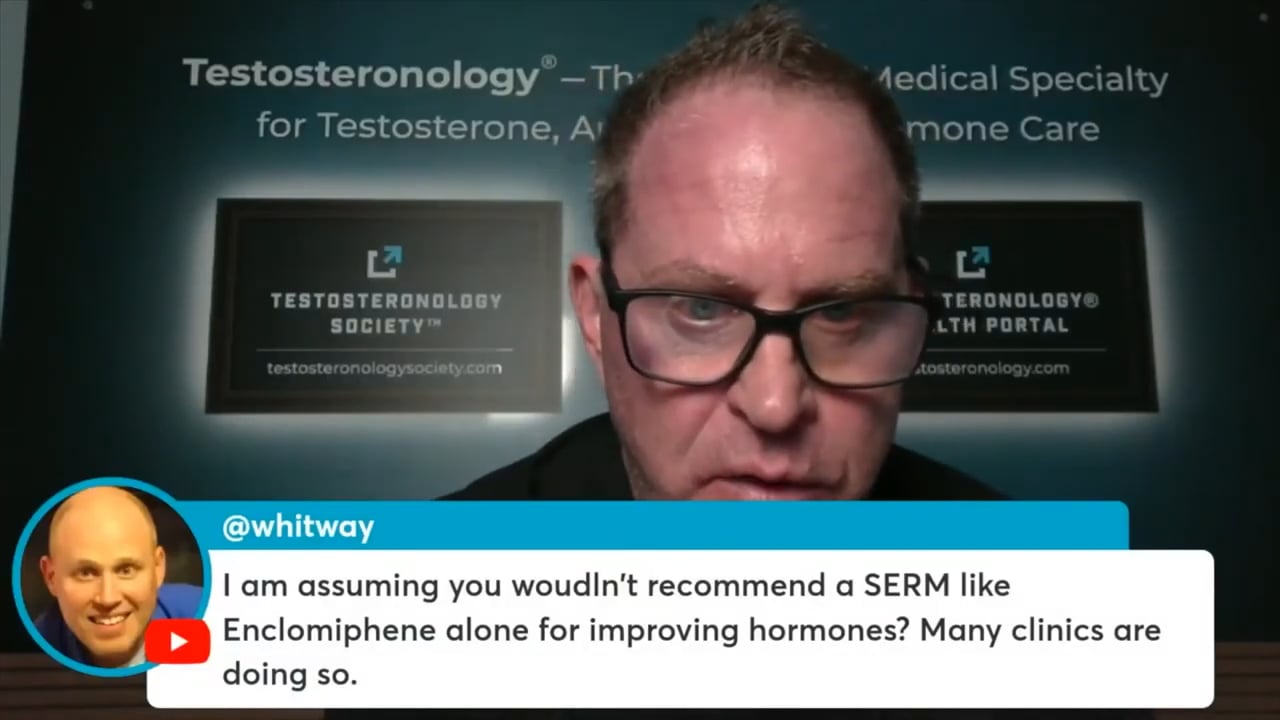
Can Enclomiphene Raise Testosterone Without Starting TRT?
Can Enclomiphene Raise Testosterone Without Starting TRT?

Viewing This Video Is A Member Exclusive Feature

But you don’t need membership to get Dr. O’Connor’s insight on this topic, it’s in the summary, key takeaways, and related drugs and conditions below.

Want to watch the full video? Join the Health Portal Today.

Join Now

Timeline

Timestamp
Topic
00:00
Dr. O’Connor addresses whether enclomiphene can be used by itself to improve testosterone in men with low or borderline-low levels. He introduces clomiphene and enclomiphene as alternatives for men who want to stimulate their own testosterone production before committing to testosterone injections.
02:20
Dr. O’Connor discusses typical use of clomiphene and enclomiphene, the limited randomized clinical trial data, and the importance of clinical experience. He then explains how blocking estrogen receptors at the hypothalamus can increase LH and FSH and stimulate endogenous testosterone production.
04:10
The discussion shifts to the difference between improving testosterone numbers and actually feeling better. Dr. O’Connor describes men whose laboratory levels remain high while the clinical response diminishes and discusses possible tolerance or downregulation over time.
05:40
Dr. O’Connor discusses potential adverse effects and why impressive testosterone numbers do not necessarily match how a man feels. He specifically raises rare visual complications and emphasizes informed discussion of risks before using clomiphene or enclomiphene.
07:20
Dr. O’Connor explains why preserving fertility for another year or two can be a useful reason to consider enclomiphene before testosterone. He also describes men who eventually discontinue it because they feel poorly and cautions that men with depression or anxiety may tolerate this approach especially poorly.

Video Summary

Men with low testosterone may consider enclomiphene before committing to long-term TRT. Dr. O’Connor explains where enclomiphene and clomiphene can fit for men with low or borderline-low testosterone who want to stimulate their own hormone production rather than begin testosterone injections immediately.

Both clomiphene and enclomiphene are selective estrogen receptor modulators. Dr. O’Connor explains that they block estrogen signaling at the hypothalamus, which can increase LH and FSH and stimulate the testes to produce more endogenous testosterone. He also discusses their usefulness for men who want to preserve fertility and notes their role around anabolic steroid use and post-cycle therapy.

Laboratory results can look impressive. Dr. O’Connor describes men whose testosterone levels rise substantially while using these medications but emphasizes that higher numbers do not always translate into feeling proportionally better. He says clinical response can diminish over time even when testosterone remains elevated on laboratory testing.

Long-term effectiveness is another concern. Based on his clinical experience, Dr. O’Connor describes men remaining on clomiphene or enclomiphene for years before eventually transitioning to testosterone. He discusses possible tolerance or downregulation while acknowledging that the underlying mechanism and long-term data remain uncertain.

Dr. O’Connor also emphasizes evaluating the entire patient before starting hormonal treatment. Low testosterone should be accompanied by appropriate symptoms, and the medical assessment should include cardiovascular, kidney, prostate, and overall health before deciding whether a trial of clomiphene, enclomiphene, testosterone, or no hormone treatment is appropriate.

Potential adverse effects also matter. Dr. O’Connor discusses rare visual complications associated with clomiphene or enclomiphene and says men with depression or anxiety may tolerate these medications poorly in his clinical experience. For some men, particularly those who want to preserve fertility temporarily, enclomiphene may provide a useful option before deciding whether to transition to testosterone.

Drug Callouts

Drug
Description
Enclomiphene
Enclomiphene is a selective estrogen receptor modulator used to stimulate endogenous testosterone production by increasing LH and FSH signaling. It may be considered by men with low testosterone who want to preserve fertility or delay starting testosterone replacement therapy.
Clomiphene
Clomiphene is a selective estrogen receptor modulator that can increase endogenous testosterone production by altering estrogen feedback at the hypothalamus. It is discussed for men with low testosterone, fertility goals, and in the context of recovery following anabolic steroid use.
Testosterone
Testosterone replacement is discussed as the treatment many men eventually transition to when clomiphene or enclomiphene no longer provides satisfactory clinical results. Starting testosterone requires consideration of symptoms, fertility goals, cardiovascular health, kidney health, prostate health, and the broader medical picture.
hCG
hCG is a hormone-based medication discussed in relation to testosterone production and fertility. For men considering testosterone or recovering from anabolic steroid use, preserving testicular function and fertility can influence whether hCG or a selective estrogen receptor modulator is considered.

Condition Callouts

Condition
Description
Low Testosterone
Low testosterone can involve reduced hormone levels accompanied by symptoms affecting energy, sexual function, body composition, mood, or overall well-being. Men considering testosterone or other hormonal therapies should have both laboratory findings and the broader clinical picture evaluated before treatment.
Depression
Depression can affect mood, motivation, sexual function, and quality of life in men being evaluated for testosterone treatment. Dr. O’Connor cautions that men with depression may tolerate clomiphene or enclomiphene poorly even when laboratory testosterone levels improve.
Anxiety
Anxiety can influence mood, sleep, sexual function, and overall well-being in men being evaluated for testosterone therapy. Dr. O’Connor describes particular concern about using clomiphene or enclomiphene in men with existing anxiety because some may experience a poor clinical response.

Key Takeaways

  • Clomiphene and enclomiphene can stimulate endogenous testosterone production without immediately starting testosterone replacement therapy.
  • Blocking estrogen feedback at the hypothalamus can increase LH and FSH and stimulate the testes to produce more testosterone.
  • Higher testosterone levels on laboratory testing do not necessarily mean a man will experience equally strong improvements in how he feels.
  • Dr. O’Connor’s clinical experience suggests that the response to clomiphene or enclomiphene may diminish over several years in some men.
  • Preserving fertility for a limited period can be an important reason to consider enclomiphene before transitioning to testosterone.
  • Depression, anxiety, potential visual complications, symptoms, fertility goals, and overall health should be considered before choosing this approach.