
Legacy App users can now access the Health Portal – just reset your password using email as username.

What Screenings Should You Get Before Starting Testosterone?
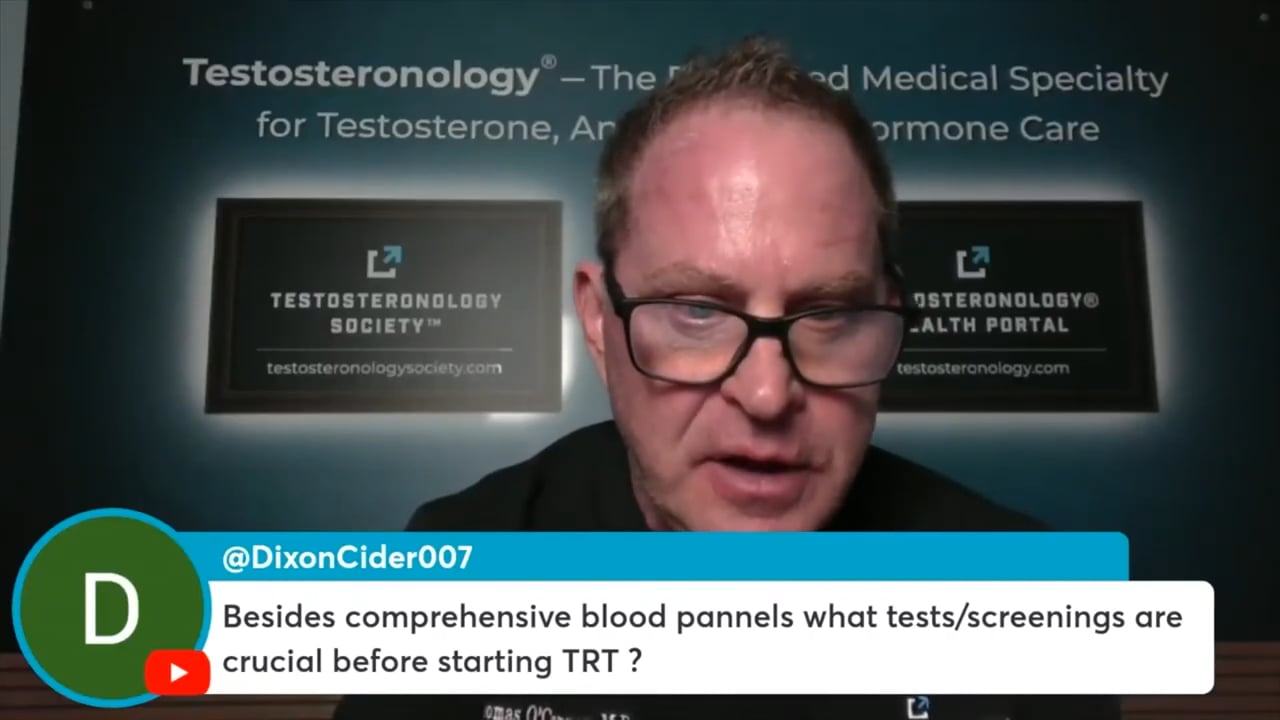
What Screenings Should You Get Before Starting Testosterone?

Viewing This Video Is A Member Exclusive Feature

But you don’t need membership to get Dr. O’Connor’s insight on this topic, it’s in the summary, key takeaways, and related drugs and conditions below.

Want to watch the full video? Join the Health Portal Today.

Join Now

Timeline

Timestamp
Topic
00:00
Dr. O’Connor explains what should be evaluated before starting testosterone beyond a standard blood panel. He introduces the ABCDs™ and emphasizes reviewing underlying health, medical history, cardiovascular risk, medications, and other conditions before beginning TRT.
03:25
The discussion shifts to understanding the heart, kidneys, prostate, and other major health systems before testosterone treatment. Dr. O’Connor discusses prostate cancer considerations and emphasizes using appropriate laboratory testing together with the broader medical picture.
05:00
Dr. O’Connor emphasizes understanding baseline health before trying to counteract androgen-related risks with medications. He discusses blood pressure control, lifestyle measures such as the DASH diet and sodium reduction, and the importance of recognizing silent disease in men using testosterone or anabolic steroids.
06:28
The focus turns from baseline screening to monitoring after testosterone begins. Dr. O’Connor discusses ongoing laboratory surveillance, including red blood cells, and stresses that long-term testosterone use requires continued medical monitoring rather than a one-time set of tests.

Video Summary

Starting testosterone safely requires more than checking hormone levels before the first injection. Dr. O’Connor explains that a comprehensive medical history and appropriate screening should come before TRT, beginning with the ABCDs™ and extending to cardiovascular, kidney, prostate, thyroid, mental health, medication, and family-history considerations.

He emphasizes understanding existing blood pressure and cholesterol problems and determining whether cardiovascular disease may already be present. Rather than waiting for a heart attack or stroke to reveal underlying disease, Dr. O’Connor discusses evaluating cardiovascular risk before testosterone begins and considering family history, alcohol use, medications, and other health factors.

Mental health history also matters. Dr. O’Connor specifically discusses depression and anxiety and explains that men with these conditions may require additional consideration when starting testosterone. He also stresses reviewing current medications, medication allergies, and the complete medical history instead of treating testosterone as an isolated hormone decision.

The evaluation should also include the heart, kidneys, prostate, and thyroid. Dr. O’Connor explains that testosterone does not cause prostate cancer but that existing prostate disease still needs to be understood, particularly in older men. Blood pressure is another major concern because androgens can adversely affect cardiovascular health in susceptible individuals.

Once testosterone begins, the focus shifts from baseline screening to ongoing monitoring. Dr. O’Connor discusses continued laboratory surveillance, including red blood cells, and emphasizes that men using testosterone or anabolic steroids should understand their underlying health first, reduce modifiable risks such as excessive sodium intake, and continue monitoring as their treatment progresses.

Drug Callouts

Drug
Description
Testosterone
Testosterone is the androgen discussed in relation to both medical TRT and nonmedical anabolic steroid use. Before starting testosterone, Dr. O’Connor emphasizes evaluating cardiovascular, kidney, prostate, metabolic, mental health, and medication factors and then continuing appropriate monitoring once treatment begins.

Condition Callouts

Condition
Description
Atherosclerosis
Atherosclerosis is plaque buildup within the arteries and may exist without obvious symptoms. For men considering or already using testosterone or anabolic steroids, identifying underlying cardiovascular disease is important because androgen use can occur alongside blood pressure, lipid, and other cardiovascular risks.
Hypertension
Hypertension is persistently elevated blood pressure and is an important cardiovascular concern for men using testosterone or anabolic steroids. Baseline blood pressure and ongoing monitoring matter because androgens may worsen blood pressure or compound existing cardiovascular risk in susceptible men.
Depression
Depression can affect mood, motivation, sexual function, and overall well-being in men considering testosterone or using anabolic steroids. A pre-existing history should be identified because changes in androgen exposure can complicate mood and make treatment response more difficult to interpret.
Anxiety
Anxiety can affect sleep, mood, sexual function, and overall quality of life in men considering testosterone therapy. Pre-existing anxiety should be recognized because changes in androgen exposure may complicate symptoms and influence how a man responds to treatment.
Prostate Cancer
Prostate cancer is a malignancy of the prostate that becomes more common with age. Men considering testosterone should have appropriate prostate evaluation because existing prostate cancer changes the clinical considerations surrounding testosterone treatment even though testosterone itself is not presented here as causing the cancer.

Key Takeaways

  • Baseline testosterone screening should include more than hormone levels and should begin with a complete medical history and broader health assessment.
  • Dr. O’Connor emphasizes identifying cardiovascular disease, blood pressure problems, cholesterol issues, and family history before starting testosterone.
  • Depression, anxiety, medications, allergies, alcohol use, and other personal health factors should be reviewed before TRT begins.
  • The heart, kidneys, prostate, and thyroid are among the major health areas Dr. O’Connor says should be understood before testosterone treatment.
  • Men using testosterone or anabolic steroids should understand their underlying health before relying on medications to manage treatment-related risks.
  • Once testosterone begins, ongoing monitoring becomes essential, including surveillance of red blood cells and other health markers.