
Should You Worry About Blood Clots Before A Vasectomy? (TRT Q&As)

Timeline
Dr. O’Connor explains that clot risk depends more on the procedure, inflammation, immobility, age, genetics, previous clot history, and overall cardiovascular risk than on testosterone alone.
Pellet extrusion can occur despite reasonable technique because individual anatomy, activity level, insertion depth, and tissue characteristics may all contribute, and Dr. O’Connor generally prefers other testosterone delivery methods for men.
A viewer using approximately 200 to 250 mg weekly reports post-meal fatigue and increased sleepiness near testosterone peaks, prompting Dr. O’Connor to question whether the weekly dose is excessive.
Dr. O’Connor emphasizes that severe premature coronary disease requires aggressive cardiovascular risk management and individualized evaluation before deciding how testosterone fits into the overall treatment plan.
Dr. O’Connor discusses BPC-157, TB-500, and nandrolone but stresses the limited clinical evidence for research peptides and warns that reducing pain does not necessarily mean the underlying injury has healed.
Dr. O’Connor says testosterone may modestly affect prostate growth but does not automatically prevent a man with BPH from receiving TRT, provided dosing and prostate symptoms are monitored appropriately.
Video Summary
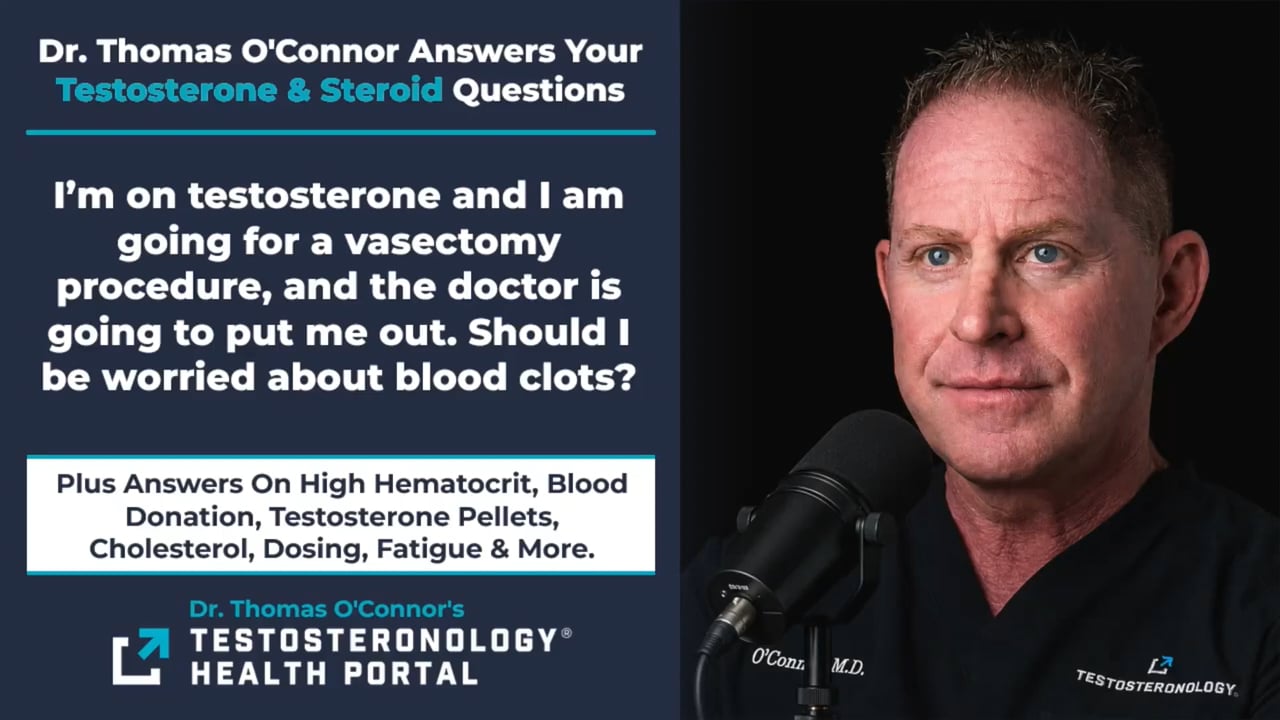
A man on testosterone asks whether a vasectomy could increase his risk of a blood clot. Dr. O’Connor explains that clot risk depends heavily on the type of procedure, inflammation, immobility, personal history, genetics, age, and other risk factors rather than testosterone alone.
The Q&A also covers testosterone-related erythrocytosis and repeated phlebotomy, testosterone pellet extrusion, fatigue on higher-dose TRT, whether testosterone can be used after multiple coronary stents, and the potential use of peptides or nandrolone for a rotator cuff injury. Dr. O’Connor repeatedly emphasizes individualized risk assessment rather than relying on a single laboratory number or treatment rule.
Later questions address free testosterone targets, acne after stopping TRT, benign prostatic hyperplasia, tadalafil, cardiovascular risk, and estrogen management. Throughout the discussion, Dr. O’Connor stresses blood pressure, heart health, kidney health, cholesterol, red blood cells, and the broader ABCDs™ when evaluating long-term testosterone use.
Drug Callouts
Condition Callouts
Key Takeaways
- Blood-clot risk around surgery depends on the procedure, inflammation, immobility, genetics, age, prior clot history, and overall health rather than testosterone alone.
- Repeated phlebotomy for testosterone-related erythrocytosis should not be automatic because iron depletion and the complete cardiovascular risk profile also matter.
- Testosterone pellets can extrude even with reasonable insertion technique, making more adjustable testosterone delivery methods preferable for some men.
- Fatigue or excessive sleepiness near testosterone peaks may be a reason to reassess whether the TRT dose is higher than necessary.
- Men with established coronary artery disease require aggressive cardiovascular risk management before testosterone decisions are considered in isolation.
- Testosterone may modestly worsen BPH in some men, but the condition does not automatically prevent carefully monitored TRT.