
Legacy App users can now access the Health Portal – just reset your password using email as username.

Could Proviron Replace Testosterone Therapy?
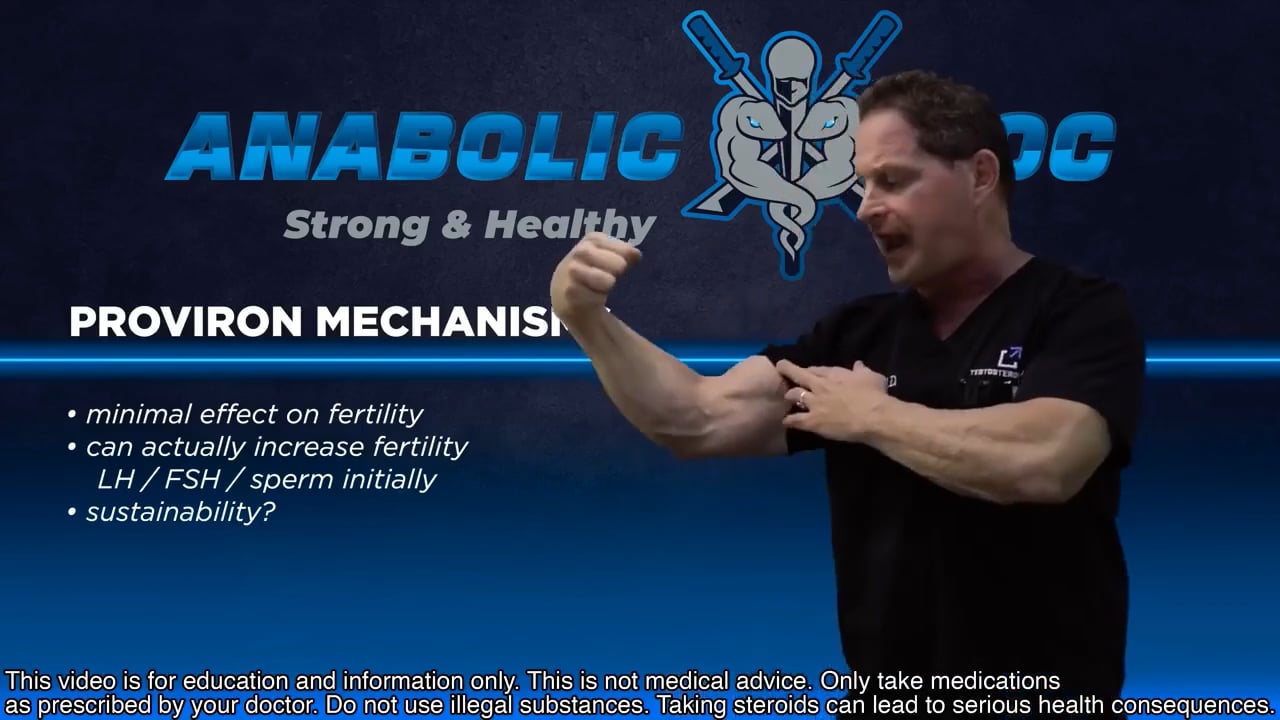
Could Proviron Replace Testosterone Therapy?

Viewing This Video Is A Member Exclusive Feature

But you don’t need membership to get Dr. O’Connor’s insight on this topic, it’s in the summary, key takeaways, and related drugs and conditions below.

Want to watch the full video? Join the Health Portal Today.

Join Now

Timeline

Timestamp
Topic
00:00
Dr. O’Connor asks whether Proviron could function as a sole replacement agent rather than an addition to testosterone or other steroids. He reviews its early development for androgen deficiency and distinguishes the pursuit of androgenic effects from muscle-building effects.
01:49
The discussion turns to Proviron’s androgenic properties, relatively limited anabolic activity, and use as a secondary “wingman” agent. Dr. O’Connor then examines claims about estrogen-related effects, fertility, and the hormonal signals involved in testicular function.
03:39
Questions about testicular suppression lead to comparisons with testosterone combined with Clomid or HCG. Dr. O’Connor asks whether Proviron could provide sustained symptom relief while preserving testicular function and calls for stronger evidence about its historical use and long-term outcomes.
05:07
Liver safety becomes a central concern as Dr. O’Connor compares Proviron’s chemistry with that of other oral steroids. He then raises unanswered questions about cholesterol, blood pressure, vascular health, and the consequences of adding further medicines to manage adverse effects.
07:10
The final section examines whether early benefits could persist and whether natural testosterone production would remain intact during prolonged use. Dr. O’Connor closes by considering Proviron as an intermittent adjunct to TRT while comparing that possibility with other approaches to estrogen-related symptoms.

Video Summary

Proviron’s history as an androgen treatment raises a question about whether it could serve as more than an add-on to testosterone. Dr. Thomas O’Connor explores its original purpose, its effects, and the unanswered questions surrounding its use as a sole replacement agent.

The discussion distinguishes androgenic effects from muscle-building effects. Dr. O’Connor describes Proviron as having relatively limited anabolic activity and revisits his “wingman” analogy for its use alongside other androgens, while asking whether symptom relief alone could make it useful for men seeking hormone replacement rather than physique gains.

Fertility and natural hormone production are central to that question. He discusses early findings involving LH, FSH, and sperm production, but repeatedly asks whether those effects persist and whether testicular function would remain intact over time. These possibilities are presented as questions requiring stronger evidence, not established guarantees.

Long-term safety becomes the next concern, particularly liver effects, cholesterol, blood pressure, and cardiovascular health. Dr. O’Connor also questions whether an initial improvement in mood, sexual well-being, or energy would remain sustainable with continued use.

The closing section returns to Proviron’s possible role as an adjunct to TRT. Comparisons with aromatase inhibitors and selective estrogen receptor modulators frame a broader discussion about managing estrogen-related symptoms without creating additional problems. The presentation remains exploratory, calling for better evidence rather than establishing Proviron as a proven substitute for testosterone therapy.

Drug Callouts

Drug
Description
Proviron (Mesterolone)
Proviron is a brand name for mesterolone, an oral androgen derived from dihydrotestosterone. Its historical use for androgen deficiency prompts Dr. O’Connor to question whether it could provide sustainable hormone-related symptom relief alone or serve a limited role alongside TRT.
Testosterone
Testosterone is an androgen hormone prescribed as replacement therapy for testosterone deficiency. It provides the main comparison for evaluating Proviron’s possible effects on symptoms, estrogen-related concerns, and suppression of natural testicular function.
Human Chorionic Gonadotropin (HCG)
Human chorionic gonadotropin is a hormone medication that mimics luteinizing hormone to stimulate testosterone production in the testes. Dr. O’Connor mentions its use alongside testosterone when comparing approaches to maintaining testicular function and discussing the potential for additional estrogen-related effects.

Condition Callouts

Condition
Description
Androgen Deficiency
Androgen deficiency is a state in which androgen production or activity is insufficient to support normal physiological functions. The possibility of relieving these symptoms without conventional testosterone replacement drives the discussion of Proviron’s original purpose and potential limitations.
Hypertension
Hypertension is persistently elevated blood pressure. It appears among the cardiovascular concerns Dr. O’Connor wants investigated before drawing conclusions about the sustainability of long-term Proviron use.
Gynecomastia
Gynecomastia is enlargement of glandular breast tissue in males. The closing comparison with aromatase inhibitors uses it as an example of an estrogen-related concern that can lead men to add further drugs to a hormone regimen.

Key Takeaways

  • Androgenic effects and muscle-building effects are different, so limited anabolic activity does not by itself determine whether a drug can relieve androgen-deficiency symptoms.
  • Historical use for androgen deficiency does not establish that Proviron is a sustainable modern replacement for testosterone therapy.
  • Early findings involving LH, FSH, or sperm production do not settle whether testicular function and fertility remain preserved during prolonged use.
  • An initial improvement in well-being is not enough to establish long-term suitability; continued benefit, hormone suppression, and tolerability also matter.
  • Assessing an oral androgen requires attention to liver effects, cholesterol, blood pressure, and cardiovascular health rather than symptom relief alone.
  • Adding a drug to manage estrogen-related concerns introduces its own tradeoffs, and laboratory numbers alone do not capture symptoms or overall tolerability.