
Legacy App users can now access the Health Portal – just reset your password using email as username.

Can You Cruise On 350 MG Of Testosterone?
Can You Cruise On 350 MG Of Testosterone?

Viewing This Video Is A Member Exclusive Feature

But you don’t need membership to get Dr. O’Connor’s insight on this topic, it’s in the summary, key takeaways, and related drugs and conditions below.

Want to watch the full video? Join the Health Portal Today.

Join Now

Timeline

Timestamp
Topic
00:00
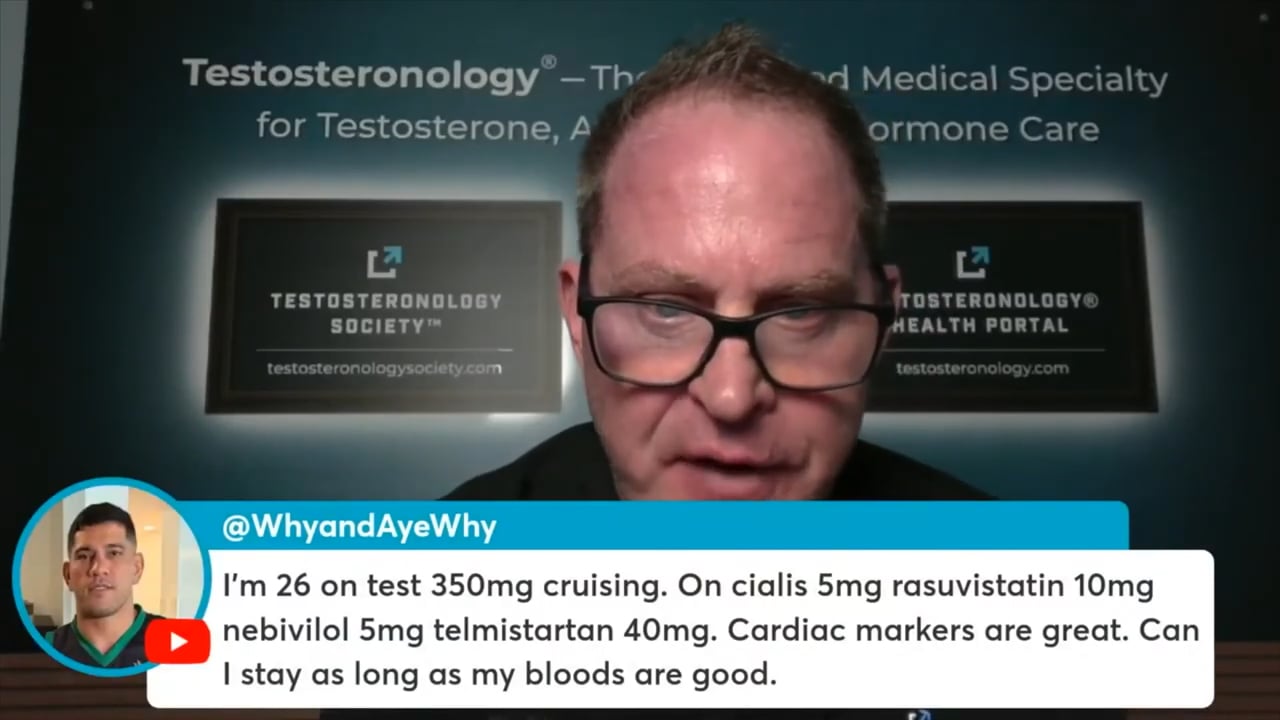
A 26-year-old man asks whether he can continue cruising on 350 mg of testosterone as long as his bloodwork and cardiac markers remain good. Dr. O’Connor questions the dose and reviews the man's use of Cialis, rosuvastatin, nebivolol, and telmisartan.
01:30
Dr. O’Connor focuses on whether the man truly has hypertension and explains why blood pressure outside the clinic matters. He discusses white coat and masked hypertension, repeated home measurements, and the importance of tightly controlling blood pressure in a young man using testosterone.
03:45
The discussion returns to whether the man needs his current medications indefinitely and why that cannot be answered without understanding his complete medical picture. Dr. O’Connor emphasizes using the ABCDs™ framework rather than relying on selected laboratory results alone.
05:45
Dr. O’Connor expands the discussion to long-term cardiovascular health, including A1C, blood pressure, endothelial health, lipids, health history, and coronary artery disease assessment. He specifically discusses coronary calcium scoring as part of understanding cardiovascular risk.

Video Summary

A 26-year-old man cruising on 350 mg of testosterone asks whether good bloodwork makes long-term use safe. He also reports taking Cialis, rosuvastatin, nebivolol, and telmisartan and says his cardiac markers look good. Dr. O’Connor immediately questions both the testosterone dose and why such a young man already requires several cardiovascular medications.

Blood pressure becomes a major focus. Dr. O’Connor asks whether the man was hypertensive before using testosterone and emphasizes that clinic readings alone may miss white coat or masked hypertension. He recommends understanding blood pressure outside the office through repeated home measurements and stresses tighter control in a young man using testosterone.

The discussion also turns to trenbolone after the man reports that his libido improved only when he added it. Dr. O’Connor warns that trenbolone can have powerful effects on sexual drive and describes men who experienced severe sexual dysfunction after stopping it despite remaining on substantial amounts of testosterone. He also recounts a patient who developed depression and persistent sexual problems following trenbolone use.

Dr. O’Connor then returns to the broader question of whether the man can remain on his current medications indefinitely. He explains that this cannot be answered from a few laboratory values because the underlying reasons for hypertension, lipid treatment, and other risk factors must first be understood.

Using the ABCDs™ framework, Dr. O’Connor emphasizes A1C, blood pressure, endothelial and cardiovascular health, lipids, personal health history, and coronary artery assessment. He specifically discusses calcium scoring and stresses that men using testosterone or anabolic steroids need a comprehensive cardiovascular picture rather than reassurance from selected blood tests alone.

Drug Callouts

Drug
Description
Testosterone
Testosterone is the primary androgen discussed, with the 26-year-old man reporting a cruising dose of 350 mg. Dr. O’Connor considers that a substantial ongoing dose and emphasizes cardiovascular, blood pressure, metabolic, and hematologic monitoring in men using testosterone.
Cialis
Cialis, or tadalafil, is a PDE5 inhibitor used for erectile dysfunction and also has vasodilating effects. In men using testosterone or anabolic steroids, its use should still be considered within the broader cardiovascular and blood pressure picture rather than as an isolated sexual-health medication.
Rosuvastatin
Rosuvastatin is a statin used to lower LDL cholesterol and reduce cardiovascular risk. Lipid management is particularly important in men using testosterone or anabolic steroids because androgen exposure may coexist with other cardiovascular risk factors.
Nebivolol
Nebivolol is a beta blocker used to treat hypertension. In men using testosterone or anabolic steroids, controlling blood pressure is an important part of reducing cardiovascular risk when androgen use or other factors contribute to elevated pressure.
Telmisartan
Telmisartan is an angiotensin receptor blocker used to lower blood pressure. Blood pressure control is especially important in men using testosterone or anabolic steroids because persistent hypertension adds to long-term cardiovascular risk.
Trenbolone
Trenbolone is a potent anabolic androgenic steroid discussed for its strong effects on libido and sexual function. Dr. O’Connor warns that some men may experience severe or persistent sexual dysfunction and mood problems after using it, even while continuing testosterone.

Condition Callouts

Condition
Description
Hypertension
Hypertension is persistently elevated blood pressure and is a major cardiovascular concern in men using testosterone or anabolic steroids. Repeated home measurements can help determine whether blood pressure is consistently elevated and whether treatment is adequately controlling it.
Pulmonary Hypertension
Pulmonary hypertension is elevated pressure within the blood vessels of the lungs. Men using testosterone or anabolic steroids who also have cardiovascular or pulmonary disease require careful medical evaluation because underlying vascular disease may significantly affect overall risk.
Depression
Depression can affect mood, motivation, sexual function, and overall well-being in men using testosterone or anabolic steroids. Dr. O’Connor specifically raises concern about significant mood problems occurring in association with trenbolone use in some men.
Sexual Dysfunction
Sexual dysfunction can include reduced libido, erectile problems, or difficulty returning to prior sexual function. In men using testosterone or anabolic steroids, powerful androgens such as trenbolone may alter sexual drive and can complicate sexual function even after the drug is stopped.

Key Takeaways

  • Good laboratory results alone do not establish that long-term use of 350 mg of testosterone is safe.
  • Dr. O’Connor emphasizes understanding why a 26-year-old man requires multiple cardiovascular medications rather than simply continuing them indefinitely.
  • Repeated home blood pressure measurements can reveal hypertension patterns that may not be apparent from a clinic reading alone.
  • Dr. O’Connor warns that trenbolone can produce powerful sexual effects and may be associated with persistent sexual dysfunction in some men.
  • Cardiovascular monitoring in men using testosterone should include blood pressure, lipids, metabolic health, health history, and appropriate coronary risk assessment.
  • The ABCDs™ framework is intended to evaluate broader health risks rather than relying only on testosterone levels or selected cardiac markers.