
Can TRT Cause Candida Overgrowth?

Timeline
Video Summary
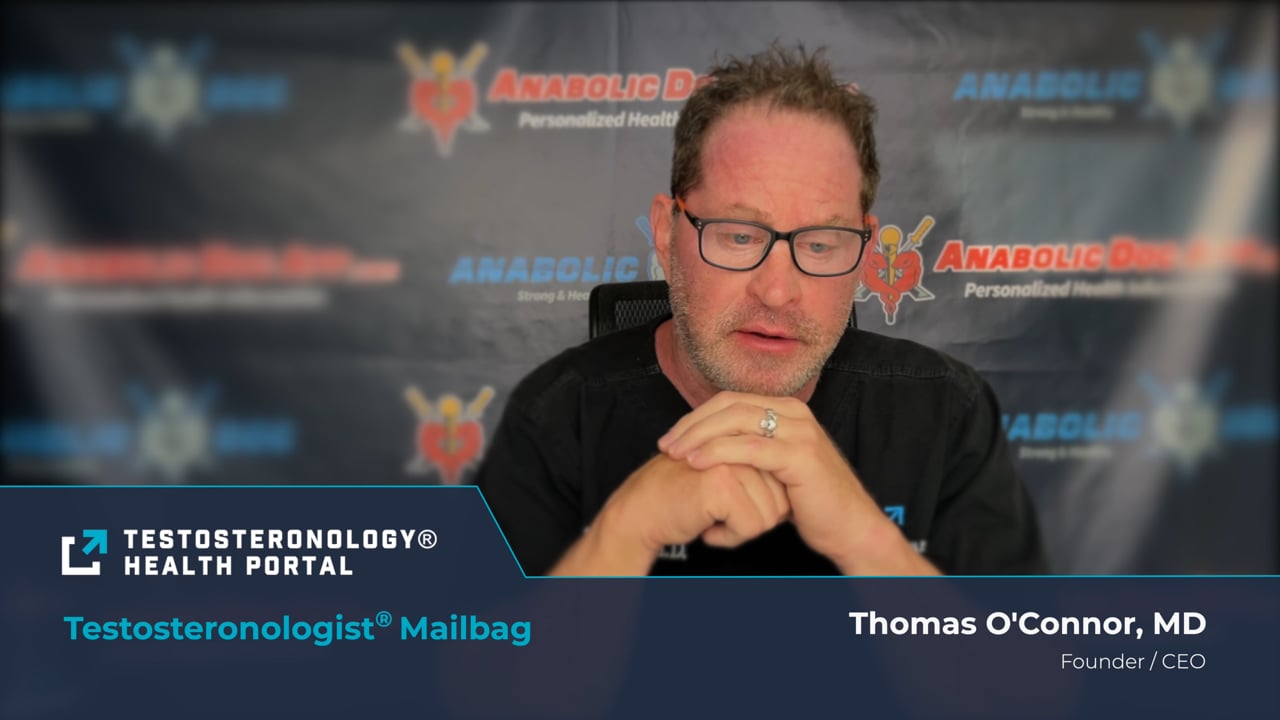
A 48-year-old man asks whether TRT may be causing recurrent Candida overgrowth and yeast-infection symptoms. Dr. O’Connor reviews the member’s report that antifungal treatment temporarily improves his symptoms and that the problems seem to lessen when he stops testosterone, while also acknowledging that Candida can affect the skin, gastrointestinal tract, and in severe cases the bloodstream.
The discussion focuses on the limitations of treating recurrent symptoms repeatedly with fluconazole without understanding the underlying cause. Dr. O’Connor recommends evaluation by an experienced gastroenterologist and discusses the possibility of other gastrointestinal problems, including small intestinal bacterial overgrowth, rather than assuming Candida is responsible for every symptom.
After reviewing the available information, Dr. O’Connor says he could not find strong evidence that testosterone replacement directly causes or worsens Candida overgrowth. He emphasizes that an individual may still experience a personal association and recommends carefully separating gastrointestinal symptoms, skin problems, depression, anxiety, and other possible causes before concluding that TRT is responsible.
Drug Callouts
Condition Callouts
Key Takeaways
- Dr. O’Connor could not find strong evidence that testosterone replacement directly causes or worsens Candida overgrowth.
- A personal pattern of symptoms improving off TRT may still deserve investigation even when broader clinical evidence for the association is weak.
- Repeated fluconazole treatment should not replace determining why presumed Candida symptoms keep returning.
- Gastrointestinal symptoms attributed to Candida may warrant evaluation for other conditions such as small intestinal bacterial overgrowth.
- Skin symptoms, gastrointestinal complaints, depression, anxiety, and other problems should be separated carefully before attributing them all to Candida or TRT.