
Legacy App users can now access the Health Portal – just reset your password using email as username.

Can Natural Testosterone Recover After Steroid Use?
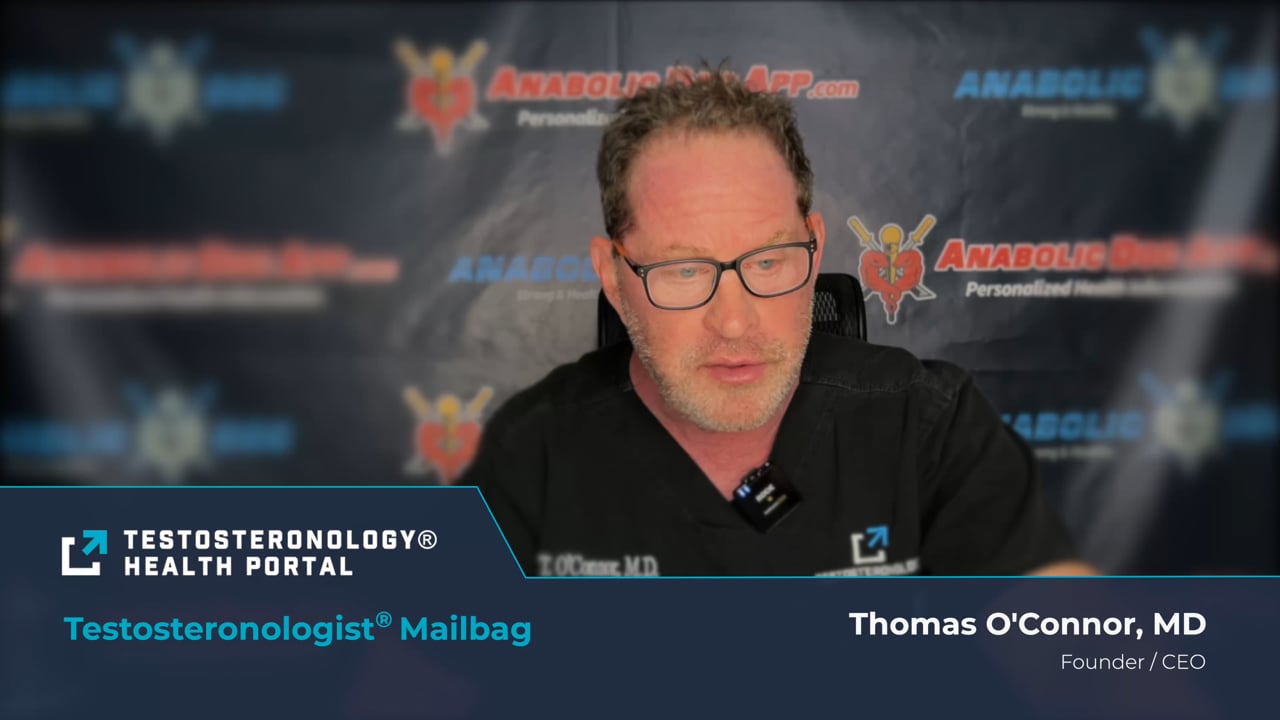
Can Natural Testosterone Recover After Steroid Use?

Viewing This Video Is A Member Exclusive Feature

But you don’t need membership to get Dr. O’Connor’s insight on this topic, it’s in the summary, key takeaways, and related drugs and conditions below.

Want to watch the full video? Join the Health Portal Today.

Join Now

Timeline

Timestamp
Topic
00:00
A 30-year-old man with years of steroid-related suppression describes erectile dysfunction, testicular atrophy, HCG use, and diminishing benefit from high-dose Clomid while asking whether natural testosterone function can still recover.
01:45
Dr. O’Connor discusses recombinant LH, HCG, and HMG as possible ways to stimulate the testes, then explains why some men with prolonged anabolic steroid suppression may never fully recover and ultimately remain on TRT.

Video Summary

A 30-year-old man asks whether natural testosterone and testicular function can recover after years of steroid use. Dr. O’Connor reviews his history of HCG, testosterone, Clomid, erectile dysfunction, and testicular atrophy while explaining how prolonged androgen suppression can create resistance or diminished response within the reproductive system.

The discussion focuses on why high-dose Clomid initially helped but then lost effectiveness and whether recombinant LH, HCG, or HMG could provide stronger testicular stimulation. Dr. O’Connor explains that Clomid acts through the brain while HCG acts directly at the testes and acknowledges that some men never fully recover natural hormonal function after prolonged anabolic steroid exposure.

For men who remain symptomatic despite repeated attempts to restart endogenous production, Dr. O’Connor discusses the reality that long-term TRT may ultimately provide the most sustainable quality of life. He also emphasizes the ABCDs™, mental health, erectile function, and the potential for Clomid itself to worsen mood in some men.

Drug Callouts

Drug
Description
Clomid (Clomiphene)
The member is taking 50 mg of Clomid twice daily but reports that the initial improvement has faded. Dr. O’Connor explains that Clomid acts centrally through the brain to stimulate LH and FSH signaling and notes that some men experience mood-related side effects.
Human Chorionic Gonadotropin (HCG)
HCG is discussed as a direct testicular stimulant that acts similarly to LH. Dr. O’Connor considers it more useful than Clomid for some men with testicular suppression and notes that recombinant preparations may be stronger but can be difficult and expensive to obtain.
Recombinant LH
Recombinant LH is discussed as a stronger and more direct way to stimulate testicular signaling in a man whose natural reproductive axis has been heavily suppressed by prior steroid use.
Human Menopausal Gonadotropin (HMG)
HMG is discussed as an FSH-related fertility medication that may help stimulate spermatogenic function when more advanced fertility-directed treatment is needed after prolonged hormonal suppression.
Testosterone
Dr. O’Connor explains that some men never fully recover endogenous testosterone production after prolonged steroid exposure and ultimately remain on TRT at a dose that provides stable symptoms and quality of life.
Zoloft (Sertraline)
Dr. O’Connor mentions his own use of Zoloft for depression and anxiety while discussing the importance of mental health in men dealing with long-term hormonal suppression and sexual dysfunction.

Condition Callouts

Condition
Description
Anabolic Steroid-Induced Hypogonadism
The member has persistent low-testosterone symptoms after prolonged anabolic steroid exposure and has not maintained a durable response to attempts at restarting natural production. Dr. O’Connor explains that some men develop long-lasting suppression and may never completely recover endogenous testosterone function.
Testicular Atrophy
The member reports significant testicular atrophy after years of hormonal suppression. Dr. O’Connor explains that prolonged loss of LH and FSH signaling from testosterone or anabolic steroids can reduce testicular size and responsiveness.
Erectile Dysfunction
Persistent erectile dysfunction is one of the member’s major symptoms despite attempts to restore hormonal function. Dr. O’Connor connects sexual function with testicular activity, androgen status, mental health, and the broader consequences of prolonged steroid suppression.
Depression And Anxiety
Dr. O’Connor discusses depression and anxiety while explaining the broader quality-of-life effects of prolonged hormonal suppression. He also cautions that Clomid can make some men feel emotionally abnormal or more depressed.

Key Takeaways

  • Some men do not fully recover natural testosterone production after years of anabolic steroid suppression.
  • Clomid stimulates the reproductive axis through the brain, while HCG acts more directly on the testes.
  • A strong initial response to Clomid or HCG may diminish over time as tolerance or reduced responsiveness develops.
  • Recombinant LH and HMG may be considered when more advanced testicular or fertility stimulation is needed.
  • Persistent testicular atrophy, erectile dysfunction, and low-testosterone symptoms may ultimately lead some men back to long-term TRT.
  • Mental health should be monitored because prolonged hormonal suppression and medications such as Clomid can affect depression and anxiety.