
Legacy App users can now access the Health Portal – just reset your password using email as username.

Blast And Cruise For The Regular Guy More Gains From TRT With Less Risk
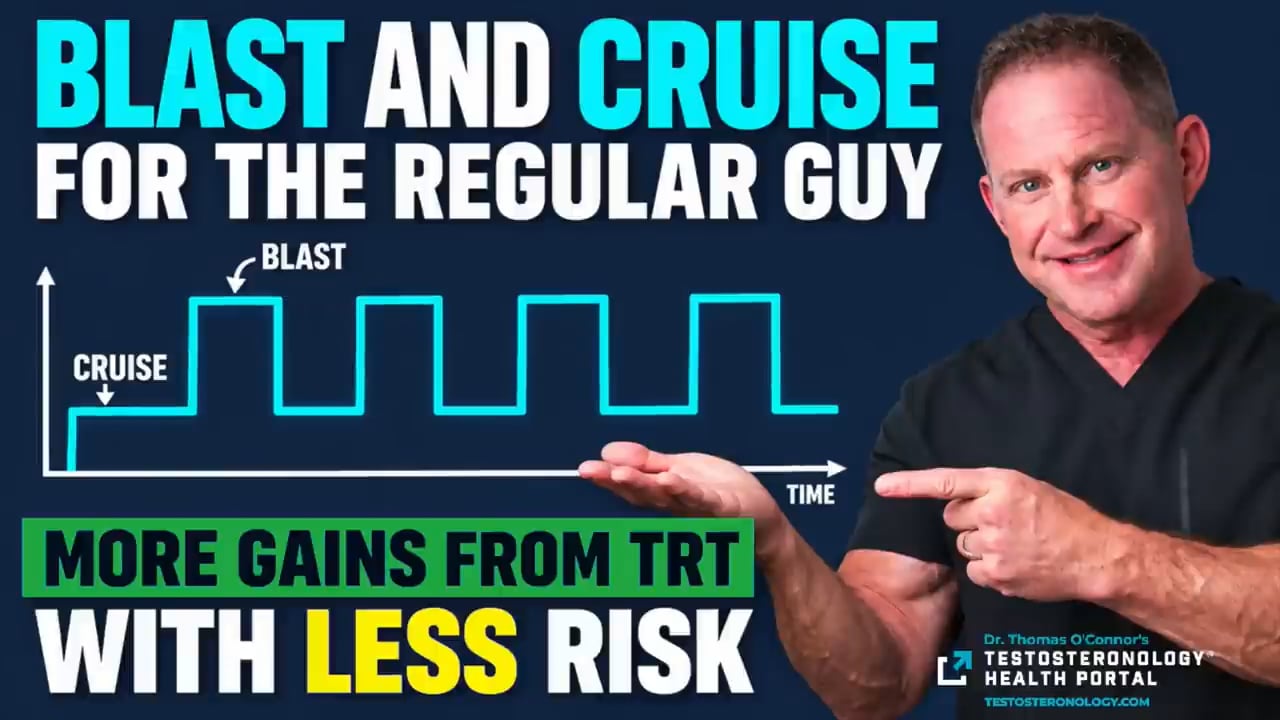
Blast And Cruise For The Regular Guy  More Gains From TRT With Less Risk

Viewing This Video Is A Member Exclusive Feature

But you don’t need membership to get Dr. O’Connor’s insight on this topic, it’s in the summary, key takeaways, and related drugs and conditions below.

Want to watch the full video? Join the Health Portal Today.

Join Now

Timeline

Timestamp
Topic
00:00
Dr. O’Connor defines blasting and cruising as alternating higher and lower androgen exposure without fully stopping use. He traces the practice to bodybuilding and strength sports and introduces the reasons men move from separate cycles toward continuous exposure.
02:50
Losing gains and feeling unwell after a cycle help explain why some men continue testosterone between higher-dose periods. Historical examples illustrate how the term “cruise” can describe very different doses and why ongoing use raises questions about cumulative exposure and future hormone recovery.
12:00
A lower-dose cruise still suppresses the hormonal signals involved in natural testosterone and sperm production. Dr. O’Connor explains that recovery varies between individuals, pregnancy can still occur, and continued suppression does not by itself prove permanent loss of function.
16:00
The focus shifts to prolonged hypogonadism, fertility treatment, and the psychological difficulty of stopping anabolic steroids. Dr. O’Connor discusses post-cycle therapy and recovery research while emphasizing uncertain outcomes and the need for experienced medical support.
22:50
Genuine TRT is distinguished from higher-dose cruising by its purpose of treating hypogonadism and restoring physiological testosterone levels. Dr. O’Connor then compares testosterone-only escalation with adding multiple steroids, using examples to explain differences in exposure rather than establish a safe regimen.
28:20
Calling a dose “TRT” or a steroid “mild” does not establish that the exposure is physiological or harmless. The presentation turns to cumulative lifetime use and cardiovascular research, including why findings from testosterone replacement studies cannot simply be applied to steroid stacks.
32:30
Dr. O’Connor reviews cardiovascular complications, including adverse cholesterol changes, hypertension, heart muscle disease, and heart failure. He then addresses androgen-induced erythrocytosis, iron disturbances from repeated blood removal, and kidney assessment through urine and blood testing.
37:00
Mental health concerns include anxiety, depression, body dysmorphia, difficulty stopping, and potentially severe withdrawal symptoms. The discussion then covers acne, hair loss, gynecomastia, fluid retention, and the complications of adding drugs to counter unwanted effects.
40:00
The closing section outlines medical priorities covering drug history, blood pressure, blood counts, iron balance, cardiovascular health, kidney function, fertility, and mental health. Dr. O’Connor emphasizes individualized assessment and returns to the central point that cruising continues androgen exposure rather than ending it.

Video Summary

Blasting and cruising means continuing androgen use between higher-dose periods rather than stopping exposure altogether. Dr. Thomas O’Connor explains how the practice developed among steroid users and why a lower-dose “cruise” should not automatically be equated with medically appropriate testosterone replacement therapy.

The discussion begins with the reasons men continue using testosterone between cycles, including maintaining strength, preserving muscle, and avoiding the physical and psychological symptoms that can follow discontinuation. Dr. O’Connor emphasizes that reducing the dose does not restore normal hormone production while external androgens remain in use.

Hormonal recovery and fertility are central concerns throughout the presentation. Some men recover after stopping steroids, while others experience prolonged low testosterone, sexual symptoms, fatigue, or depression. Post-cycle therapy is discussed as a possible part of care, but not a guarantee that natural testosterone production or fertility will return.

Dr. O’Connor distinguishes genuine replacement therapy from higher-dose cruising and compares testosterone-only exposure with adding multiple anabolic steroids. He cautions that describing a drug as “mild” does not make it harmless and repeatedly returns to cumulative exposure as a major concern.

The medical review covers cardiovascular disease, blood pressure, cholesterol changes, heart muscle abnormalities, increased red blood cells, iron disturbances, and kidney injury. Mental health receives equal attention, particularly body image concerns, difficulty stopping, depression, and the potential severity of withdrawal symptoms.

The presentation closes with practical priorities for medical assessment rather than a recommended steroid cycle. These include an honest drug history, blood pressure measurement, blood counts and iron studies, cardiovascular evaluation, kidney testing, and discussion of hormones, fertility, and mental health with qualified healthcare providers.

Drug Callouts

Drug
Description
Testosterone
Testosterone is an androgen hormone prescribed as replacement therapy for testosterone deficiency and also used nonmedically for muscle and performance gains. The distinction between physiological replacement and ongoing higher-dose exposure anchors Dr. O’Connor’s explanation of why a “cruise” is not automatically TRT.
Human Chorionic Gonadotropin (HCG)
Human chorionic gonadotropin is a hormone medication that mimics luteinizing hormone to stimulate testosterone production in the testes. Dr. O’Connor names it among treatments used in recovery and fertility care while stressing that no post-cycle approach guarantees restoration of natural hormone function.

Condition Callouts

Condition
Description
Anabolic Steroid-Induced Hypogonadism
Anabolic steroid-induced hypogonadism is reduced natural testosterone production caused by suppression of the hormonal system that regulates testicular function. It explains a central concern in the presentation: some men experience prolonged low testosterone and related symptoms after stopping steroids.
Androgen-Induced Erythrocytosis
Androgen-induced erythrocytosis is an increase in red blood cells associated with testosterone or other androgen exposure. During the blood and kidney review, Dr. O’Connor emphasizes assessing blood counts and iron status rather than relying on repeated blood removal without understanding the broader picture.
Cardiomyopathy
Cardiomyopathy is disease of the heart muscle that can impair its structure or function. The cardiovascular discussion identifies it as a serious concern associated with anabolic steroid exposure and connects it with the broader risk of heart failure.
Depression
Depression is a mental health condition involving persistent low mood or loss of interest that can affect daily functioning. Dr. O’Connor highlights its importance during steroid withdrawal and prolonged hormonal suppression, explaining why stopping requires attention to psychological as well as physical health.

Key Takeaways

  • A cruise reduces androgen exposure but does not end it, so it should not be treated as time off steroids or proof of hormonal recovery.
  • The label “TRT” does not establish that a dose produces physiological testosterone levels, and describing a steroid as “mild” does not make it harmless.
  • Natural testosterone production and fertility may recover differently after steroid use, and post-cycle therapy cannot guarantee either outcome.
  • Cumulative exposure matters: lower-dose periods still contribute to the total duration of androgen use.
  • Steroid-related health assessment extends beyond hormone levels to blood pressure, cholesterol, heart function, red blood cells, iron balance, and kidney health.
  • Difficulty stopping, depression, body image concerns, and withdrawal symptoms deserve medical attention alongside the physical complications of steroid use.

More Videos