
How Can Weekend Warriors On Testosterone Prevent Injuries?

Timeline
Video Summary
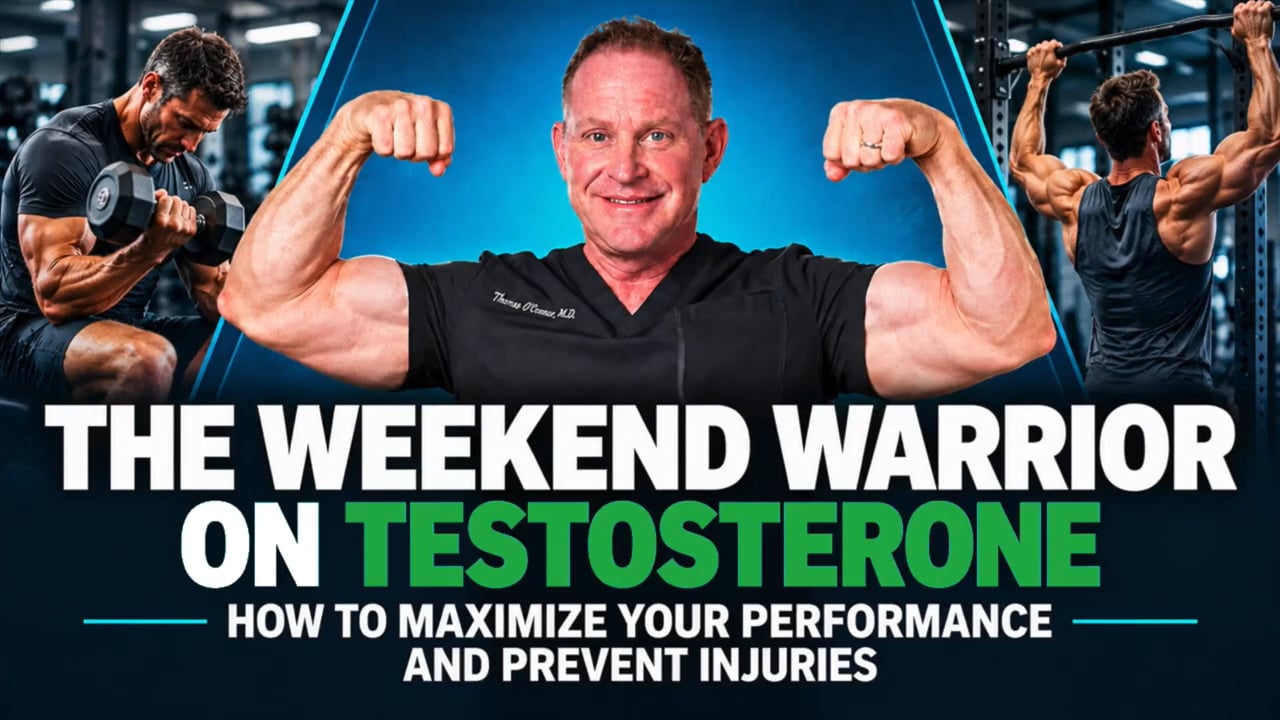
Middle-aged men on testosterone can feel stronger before their conditioning and connective tissues are ready. Dr. O’Connor explains that TRT may improve strength, lean body mass, energy, and training capacity faster than tendons, mobility, cardiovascular fitness, technique, and recovery adapt.
He identifies five major weekend-warrior traps: muscle-tendon mismatch, going from sedentary weekdays to extreme weekend activity, confusing strength with conditioning, inadequate recovery, and ignoring the medical effects of testosterone. Consistent training, progressive loading, cardiovascular conditioning, mobility work, sleep, nutrition, hydration, and recovery can help reduce injury risk while maintaining performance.
Dr. O’Connor also emphasizes medical surveillance through the ABCDs™, including blood pressure, hematocrit, testosterone dose, sleep apnea, cardiovascular risk, kidney and metabolic health, and prostate screening. The goal is not simply more testosterone and harder training, but sustainable performance that allows men to remain active without unnecessary musculoskeletal or cardiovascular setbacks.
Drug Callouts
Condition Callouts
Key Takeaways
- Testosterone can improve strength and training capacity faster than tendons, conditioning, mobility, and technique adapt.
- Going from sedentary weekdays directly into intense weekend exercise creates unnecessary injury risk even when testosterone makes a man feel stronger and more capable.
- Strength alone does not provide cardiovascular endurance, balance, flexibility, agility, eccentric control, or the movement preparation required for recreational sports.
- Consistent training during the week is safer and more sustainable than relying on sporadic maximal weekend workouts.
- Sleep, nutrition, hydration, mobility work, rest days, and active recovery remain essential because testosterone does not eliminate age-related recovery limitations.
- Weekend warriors on TRT should monitor blood pressure, hematocrit, testosterone dose, sleep apnea, cardiovascular risk, kidney health, metabolic health, and the broader ABCDs™.