
Legacy App users can now access the Health Portal – just reset your password using email as username.

Can You Add Enclomiphene To Testosterone Microdosing?
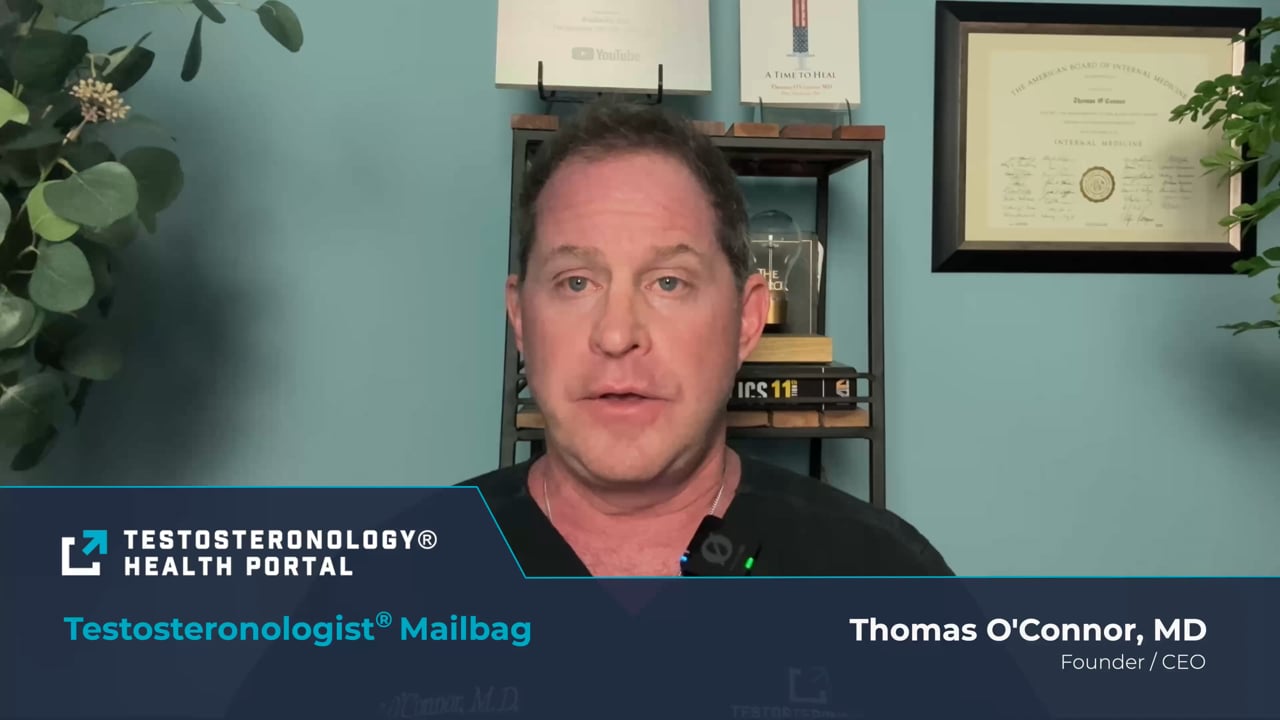
Can You Add Enclomiphene To Testosterone Microdosing?

Viewing This Video Is A Member Exclusive Feature

But you don’t need membership to get Dr. O’Connor’s insight on this topic, it’s in the summary, key takeaways, and related drugs and conditions below.

Want to watch the full video? Join the Health Portal Today.

Join Now

Timeline

Timestamp
Topic
00:00
A 35-year-old man who recently started daily testosterone microdosing asks whether he can add enclomiphene and what benefits the combination might provide.
02:09
Dr. O’Connor explains testosterone cypionate pharmacokinetics, daily microdosing, dose calculations, and why 15 to 20 mg every day may produce more testosterone exposure than the member needs.
07:00
After reviewing different injection schedules, Dr. O’Connor recommends considering less frequent microdosing and explains how symptoms and properly timed trough measurements can help determine whether the regimen is working.
08:50
Dr. O’Connor directly addresses enclomiphene, explaining how it stimulates LH and FSH signaling while cautioning against routinely combining it with testosterone, especially in a man already reporting depression and irritability.
10:20
The discussion shifts to preserving testicular size and fertility, with Dr. O’Connor describing HCG as a more established option to accompany testosterone while acknowledging added injections, cost, and estrogenic effects.
11:55
Dr. O’Connor warns against layering testosterone, enclomiphene, and additional estrogen-blocking drugs together because excessive hormonal manipulation may worsen mood, joints, lipids, and long-term sustainability.

Video Summary

A 35-year-old man asks whether enclomiphene should be added to newly started daily testosterone microdosing. Dr. O’Connor first questions the member’s daily dose of 15 to 20 mg of testosterone and explains how testosterone cypionate accumulates because of its long half-life. He discusses more sustainable injection schedules, the importance of calculating very small doses accurately, and why symptoms and properly timed testosterone levels should guide dose adjustments.

The discussion then turns directly to enclomiphene. Dr. O’Connor explains that enclomiphene is a selective estrogen receptor modulator that can increase LH and FSH signaling and stimulate endogenous testosterone production, but he does not favor routinely adding it to exogenous testosterone. He is particularly cautious because the member already reports depression, irritability, low energy, and poor motivation, and additional hormonal manipulation may worsen mood or estrogen-related effects.

If the goal is preserving testicular size or fertility while using testosterone, Dr. O’Connor discusses HCG as the more established companion approach, although it also adds cost, injections, and additional estrogenic effects. He ultimately recommends simplifying the regimen, reconsidering the testosterone dose and injection schedule, and avoiding combinations of testosterone, enclomiphene, and additional estrogen-blocking medications that may become difficult to manage long term.

Drug Callouts

Drug
Description
Testosterone Cypionate
The member recently began taking approximately 15 to 20 mg of testosterone daily. Dr. O’Connor explains that testosterone cypionate has a long half-life, so even small daily doses accumulate and must be evaluated by total weekly exposure, symptoms, and appropriately timed laboratory testing.
Enclomiphene
The member specifically asks about adding enclomiphene to testosterone. Dr. O’Connor explains that enclomiphene is a selective estrogen receptor modulator that can increase LH and FSH signaling and endogenous testosterone production, but he does not favor routinely combining it with exogenous testosterone.
Clomiphene
Clomiphene is discussed alongside enclomiphene as a selective estrogen receptor modulator that influences hypothalamic and pituitary signaling. Dr. O’Connor distinguishes these medications from testosterone and notes that he may use them in fertility-oriented treatment rather than automatically combining them with ongoing TRT.
Human Chorionic Gonadotropin (HCG)
HCG is discussed as the more established option when a man using testosterone wants to preserve testicular stimulation or fertility. Dr. O’Connor explains that HCG acts similarly to LH but can also increase endogenous testosterone and estrogen while adding cost and additional injections.

Condition Callouts

Condition
Description
Depression
The member reports depression, low energy, poor motivation, and irritability before adding enclomiphene. Dr. O’Connor considers this particularly important because changing testosterone exposure or adding medications that alter estrogen signaling may affect mood in susceptible men.
Testicular Atrophy
Preserving testicular size is discussed as one possible reason a younger man might want additional therapy while using testosterone. Exogenous testosterone suppresses LH and FSH signaling, which can reduce testicular stimulation and contribute to testicular atrophy over time.
Fertility Impairment
Future fertility is another possible reason for considering enclomiphene or HCG with testosterone. Dr. O’Connor explains that exogenous testosterone suppresses LH and FSH, while fertility-directed strategies attempt to preserve or restore testicular stimulation and sperm production.
Edema
Dr. O’Connor notes that adding HCG to testosterone can increase overall testosterone and estrogen exposure and may contribute to puffiness or edema. This illustrates why adding another hormone to TRT can create additional symptoms that then require further management.

Key Takeaways

  • Daily testosterone microdosing still requires careful attention to total weekly exposure because small doses of long-acting testosterone cypionate continue to accumulate.
  • Dr. O’Connor questions whether 15 to 20 mg of testosterone every day is necessary and recommends evaluating more sustainable dosing schedules.
  • Enclomiphene can stimulate LH, FSH, and endogenous testosterone production, but Dr. O’Connor does not favor routinely adding it to exogenous testosterone.
  • Existing depression and irritability make additional manipulation of testosterone and estrogen signaling especially important to approach cautiously.
  • HCG is presented as a more established option for men trying to preserve testicular stimulation or fertility while remaining on testosterone.
  • Combining testosterone, enclomiphene, and additional estrogen-blocking medications can create unnecessary hormonal complexity and may be difficult to sustain long term.